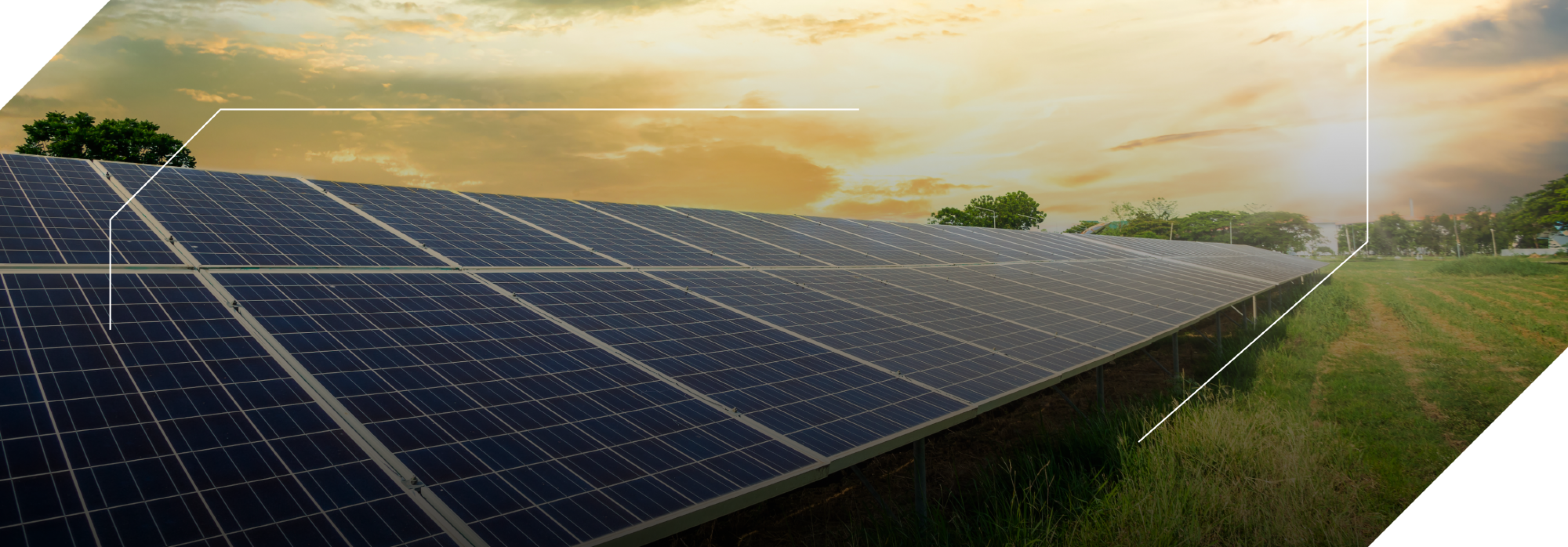
Bellville
Solar Farm
Who are Power Capital Renewable Energy?
Power Capital Renewable Energy (PCRE) was founded in 2011, with a long-term goal of producing clean, sustainable energy.
We are a specialist, independent Irish company with a growing international presence. We build photovoltaic (PV) solar farms that produce electricity and continue to grow our portfolio through projects which we believe will help meet climate action targets and benefit local communities.
Project Background
Following a public consultation, PCRE has submitted a planning application to Galway County Council for the proposed Bellville Solar Farm.
The proposed solar farm is located on lands approximately 15 kilometres north of Athenry in Co. Galway, near Monivea and Abbeyknockmoy.
The proposed development area spans the townlands of Lissaniska, Oakwood South, Cahernaglass, Ryehill Demesne, Carrowmore, Parkacurry, Killaclogher, Ballynaboorkagh, Cashlaundarragh, Corrafaireen, Shantallow, Carrowreagh East, Caherlissakill, and Laragh Beg.
The proposed electricity substation and Battery Energy Storage System (BESS) do not form part of the solar farm planning application and will be subject to separate planning applications to An Coimisiún Pleanála.
Project Benefits
-
 This project will contribute to the decarbonisation of energy supply.
-
 This project will help to ensure Ireland’s energy security.
-
 This project will boost the local economy, including a Community Benefit Fund.
-
 The technology is proven and operates safely around the world.
-
 The project can co-exist with agriculture and offer diversification for landowners.
Public Consultation
The Public Consultation is now closed.
Information on the planning application can be accessed on Galway County Council’s website: https://www.galway.ie/en/planning-building
Frequently Asked Questions (FAQs)
Who are Power Capital Renewable Energy?
Power Capital Renewable Energy (PCRE) is an independent Irish company founded in 2011, with the long-term goal of producing clean, sustainable energy to power Irish homes, farms and businesses. Based in Ireland, we are investing significantly in solar energy development across the country and are backed by European investors, Omnes Capital, who are based in France.
Why is this project needed?
Solar energy is essential for Ireland’s 2050 Net Zero greenhouse gas emissions target. The Bellville Solar project supports that goal by delivering more renewable energy to the grid.
Solar farms generate clean, renewable energy with no fumes or harmful emissions.
The Bellville Solar project will further increase Ireland’s homegrown supply of clean electricity, bolstering our energy security in the context of uncertain geopolitical events.
Ireland also has a target of generating 80% of its electricity from renewable sources by 2030. It is recognised that solar energy will have a significant part to play, with 8GW to be installed by 2030; the Bellville Solar project will contribute substantially to this goal.
What consultation has been undertaken with the local community?
Following a well-attended public event in June 2025, we are now carrying out further pre-application consultation on the project and inviting residents and other stakeholders to view the project information and provide their feedback on the proposals. Significant feedback has been received to date.
The public consultation period will run from Friday 26 June 2026 to Friday 17 July 2026. Residents can also arrange an individual meeting with the project team, with representatives in the area on 6 and 7 July 2026. Meetings can be arranged at residents' homes or at another convenient location.
Will the local community benefit from the project?
Yes, the project stands to have a significantly positive impact on the local community.
Power Capital Renewable Energy is committed to contributing positively to the development and social wellbeing of the local community by supporting local initiatives, addressing community needs and enhancing biodiversity.
A Community Benefit Fund will be established for the Bellville Solar Farm Project.
Contributions to the fund will be linked to the energy generated by the solar farm and are expected to provide significant support to the local community. Over the 15-year lifetime of the Community Benefit Fund, it is anticipated that funding will be used to support local community projects, prioritising not-for-profit organisations and initiatives aligned with the UN Sustainable Development Goals.
Local homes will benefit from clean, secure and affordable electricity generated from projects such as Bellville Solar.
Can the land which is used for solar farms still be used for agriculture?
Solar panels can co-exist with agriculture and offer diversification for landowners. The land beneath solar panels can continue to be used for grazing.
What engagement has been carried out with landowners in the local area?
The successful planning, construction and management of solar farms is dependent on successful partnerships with our landowners.
We take access agreements, the rights and the privacy of landowners extremely seriously. We never access private property without permission. All communications with landowners are transparent, respectful, and voluntary.
Can the land be returned to its original use?
After being decommissioned, solar panels can be recycled, and land can be returned to its original use. When the project is decommissioned, the land will be returned to its original use in line with a Decommissioning and Restoration Plan.
Have any project works been carried out?
No.
PCRE have not undertaken any works prior to the receipt of planning permission and will not do so until all necessary consents have been secured. As an experienced developer, we are fully aware of our obligations under national planning laws and regulations. PCRE will continue to always follow due process.
Prior to the submission of a planning application, we have been undertaking surveys and assessments covering areas including ecology, archaeology, landscape and visual, noise, traffic and drainage. These reports will be submitted alongside the planning application to ensure that all potential environmental impacts have been robustly assessed, with mitigations introduced where necessary – before any works take place.
Is battery storage a safe technology?
Battery storage is an established, proven and reliable form of battery technology which is used widely around the world as part of the renewable energy mix.
Battery storage systems are rigorously and regularly tested to international safety standards at all stages of development, including design, construction, installation and operation.
Additional information on this technology has been posted to residents and if you would like further details, please get in touch with us.
Will there be noise from the proposed development?
The location of noise-generating equipment will be carefully selected to ensure it is an appropriate distance away from residential receptors. A Noise Impact Assessment will be submitted with the planning application and, where required, noise mitigation measures will be implemented to ensure that noise levels always remain at an acceptable level.
How long do solar farms take to build?
There is a 12–24-month construction timeframe typically associated with these projects. Whilst this is indicative and subject to change based on several factors, it is considered to be a realistic estimate of the length of time it takes to construct a solar farm. Should planning permission be granted, construction timeframes will be communicated to the local community on an ongoing basis from that point forward.
Will there be an increase in traffic?
The construction methodology for the project will be detailed within the Construction Environmental Management Plan (CEMP) submitted with the planning application. Construction traffic will be managed according to measures laid out within the CEMP to minimise disruption to local residents and ensure road safety.
Is there visual impact or glare from solar panels?
A Landscape and Visual Impact Assessment is being prepared and will be submitted with the planning application. Where required, mitigation will be provided to minimise impacts, including the planting of new hedgerows.
A Glint and Glare Assessment will be submitted with the planning application to assess the glint and glare impact on receptors, including private dwelling houses, and describe how this impact will be mitigated. The positioning of the panels themselves, and the use of an anti-reflective coating, will minimise impact.
How do solar farms impact biodiversity?
The solar farm, including new hedgerows and other vegetation, will provide a habitat for a variety of wildlife to improve biodiversity within the local ecosystem. A Planning and Environmental Considerations Report will be submitted alongside the planning application.
How do solar farms impact drainage?
The planning application will be supported by a Drainage Management Plan, and drawings which will detail the drainage features to be implemented to ensure that surface water is kept at acceptable levels.
What security measures will be used on site?
Solar farms are typically enclosed by fencing, approximately 2 metres high, with hedgerows planted and enhanced where required. Security cameras will be installed on site exclusively to monitor activity within the site itself. All cameras will be angled inward toward the site and will not face outward, ensuring the privacy of local residents.
Will there be any impact on property values?
Studies have shown that property values are correlated to a range of factors which can impact market conditions.
Leave Feedback
If you have a question about this project, or would like to provide us with any feedback you may have, please enter it below.